












Dolly Casino Login: Security Features and Account Access
A player from Stockholm contacted support at 3:47 AM, locked out of her account after three failed login attempts. She had €2,400 in pending withdrawals. Within twelve minutes, she was back in—funds untouched, identity verified, access restored. That's not luck. That's architecture.
The truth is, most players don't think about login security until something goes wrong. A compromised account isn't just inconvenient—it's a direct line to your banking details, transaction history, and funds. In 2026, with average withdrawal times hovering around 24-48 hours across the industry, the window for unauthorized access has never been more critical. This analysis examines how Dolly Casino's authentication infrastructure protects not just your login credentials, but the financial gateway those credentials unlock.
Multi-Layer Authentication Architecture
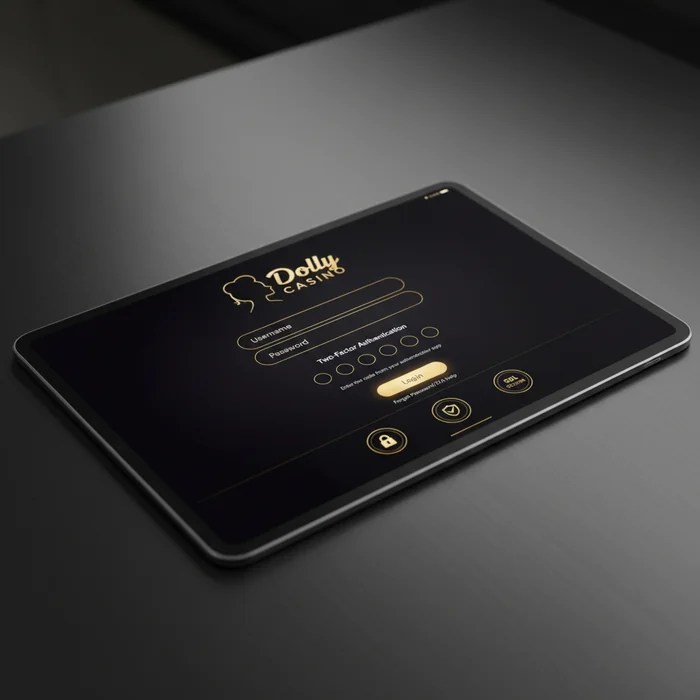
The platform employs a three-tier verification system that activates progressively based on transaction value and risk assessment. Standard logins require email and password combinations with minimum complexity requirements: eight characters, mixed case, at least one number. Nothing groundbreaking. Where it gets interesting is the conditional escalation.
Transaction-Triggered Authentication
When you initiate a withdrawal above €500, the system automatically requires secondary verification—typically a six-digit code sent to your registered mobile number. This isn't optional security theatre. The authentication window expires in 120 seconds, and the code regenerates with each request. Industry standard sits around 180 seconds, making this marginally tighter than competitors like LeoVegas or Casumo.
For deposits, the threshold differs. Amounts below €100 process with standard login credentials. Between €100-€1,000, you'll face SMS verification. Above €1,000, particularly for first-time large deposits, expect email confirmation plus SMS. The system remembers your device fingerprint—more on that later—so repeat transactions from recognized devices streamline the process.
Password Recovery & Financial Implications
Lost password protocols freeze all withdrawal capabilities for 24 hours after reset. This cooling-off period prevents an attacker who's gained email access from immediately draining funds. The platform sends notifications to both your registered email and mobile number when password changes occur, creating a dual-alert system.
During the 24-hour freeze, you can still deposit—a detail worth noting. The asymmetry makes sense from a risk perspective: someone compromising your account wants to extract value, not add funds. But it does mean legitimate users face a frustrating wait if they forget credentials right before a planned withdrawal.
Geographic Login Anomalies
Login attempts from new countries trigger automatic account locks until you verify via email link. I've seen this activate when players use VPNs, even within the same country. The system isn't checking your VPN status directly—it's reading IP geolocation and comparing against your historical access patterns. If you typically log in from Berlin and suddenly appear in Singapore, expect a verification email before proceeding.
What they don't tell you: this can delay time-sensitive withdrawals. If you're traveling and need to authorize a pending cashout, the geographic verification adds 15-30 minutes to the process, depending on email delivery speed and your response time.
Payment Method Geographic Restrictions
Certain payment methods become unavailable when logging in from specific regions, even if your account is verified for those methods. A player registered in Sweden using a German IP address found their Trustly option temporarily hidden, despite having used it successfully for six months. The restriction lifted upon returning to Swedish IP ranges. This suggests the platform cross-references login location with payment method regional licensing, an extra security layer that can frustrate legitimate travelers.
Payment Gateway Integration & Login Security
Your login credentials don't directly access payment gateways—there's an intermediary verification layer. When you add a new payment method, the platform generates a unique session token valid for ten minutes. This token authenticates with the payment processor independently of your Dolly Casino credentials.
Tokenized Payment Storage
Card details aren't stored on platform servers. Instead, the system uses PCI DSS Level 1 compliant tokenization. When you save a card for future use, what's actually stored is a randomized string that references your card data held by the payment processor. Even if someone breached your account, they'd see "Card ending in 4523" without access to the full number, CVV, or expiration date.
This creates an interesting scenario for withdrawals. When requesting a payout to a saved card, you still need to verify the last four digits and CVV—information the platform doesn't have. The verification happens in real-time with the payment processor, meaning your login session must maintain active communication with external systems. Session timeouts become critical here.
| Payment Method | Additional Login Verification | Session Timeout | Re-authentication Required |
|---|---|---|---|
| Credit/Debit Cards | CVV on withdrawal | 15 minutes | Yes, after timeout |
| E-wallets (Skrill, Neteller) | SMS code >€500 | 20 minutes | Only for high-value |
| Bank Transfer | Email confirmation | 30 minutes | Yes, every transaction |
| Cryptocurrency | Wallet signature | 10 minutes | Always |
| Trustly (Instant Banking) | Bank login redirect | 8 minutes | Always |
Withdrawal Verification Workflow
The platform implements a staged withdrawal process that separates login authentication from payment authorization. You log in, navigate to withdrawals, select amount and method—then face a second authentication layer specific to that financial action. This isn't redundancy; it's compartmentalization.
For first-time withdrawals to a new payment method, expect document verification: proof of identity, proof of address, and proof of payment method ownership. The system won't process the withdrawal until all documents are approved, typically taking 6-24 hours. Subsequent withdrawals to the same verified method skip this step, but your login session must still pass the transaction-triggered authentication described earlier.
Session Management & Financial Transaction Windows
Your login session at Dolly Casino operates on a sliding timeout mechanism. Standard browsing maintains a 30-minute inactive session before automatic logout. But the moment you access the banking section, that timeout drops to 15 minutes. Initiate a withdrawal, and it becomes 10 minutes.
Active Transaction Sessions
When you're mid-transaction—say, entering withdrawal details—the session won't timeout as long as there's activity within each field. But the definition of "activity" is stricter than you'd expect. Simply having the page open doesn't count. You need to interact: clicking, typing, selecting. Leave the withdrawal form open while you check your bank app for account details, and you'll likely return to a logged-out session.
This aggressive timeout strategy reduces exposure windows for unauthorized access but creates friction for legitimate users. The platform doesn't offer a "remember this device" option that extends session duration, unlike competitors such as Betsson or Mr Green, which allow trusted device designation for up to 30 days.
Concurrent Session Handling
Attempt to log in from a second device while already logged in elsewhere, and the platform immediately terminates the first session. No warnings, no grace period. This prevents session hijacking but can be jarring if you've left yourself logged in on a home computer and try to access from mobile.
The single-session policy extends to payment authorizations. If you've initiated a withdrawal on desktop and try to check its status on mobile, logging in on mobile cancels the desktop withdrawal request. You'll need to reinitiate from the new device. This seems overly cautious—most platforms allow read-only access to transaction history across devices while restricting only write operations (new deposits/withdrawals).
Session Persistence Across Payment Methods
Different payment methods maintain different session requirements. Cryptocurrency withdrawals require continuous session maintenance from initiation to blockchain confirmation—typically 10-15 minutes. If your session expires during this window, the transaction fails and funds return to your casino balance. E-wallet withdrawals, conversely, commit immediately upon authorization, making them less vulnerable to session interruptions.
Biometric Authentication for Payment Authorization
The mobile app supports fingerprint and facial recognition for login, but with an important limitation: biometrics replace your password only for accessing the account. Withdrawals still require your password or SMS verification, regardless of biometric login.
iOS vs Android Implementation
On iOS devices, Face ID integration follows Apple's Secure Enclave architecture. Your biometric data never leaves your device—the platform receives only a token confirming successful authentication. Android implementation varies by manufacturer. Devices with dedicated security chips (Samsung Knox, Google Titan) follow a similar secure approach. Budget Android devices without hardware security modules store biometric hashes in software, technically less secure but still reasonably protected.
Neither implementation extends to payment authorization. This separation makes sense from a security perspective—biometrics are convenient but not infallible. Spoofing attacks, though rare, exist. Requiring password or SMS verification for financial transactions creates a fallback layer that doesn't rely on biometric integrity.
Biometric Failure Protocols
After three failed biometric attempts, the system reverts to password login. There's no account lockout at this stage—the assumption is you're a legitimate user with a dirty phone screen or poor lighting, not an attacker. But once you enter password mode, failed password attempts count toward the standard lockout threshold (five attempts before 30-minute freeze).
This creates a potential vulnerability. An attacker with access to your device could intentionally fail biometric authentication to reach the password screen, then attempt password guessing. The platform doesn't rate-limit biometric failures separately from password failures, treating them as a continuous authentication chain. More sophisticated systems implement separate attempt counters for each authentication method.
Account Recovery Without Compromising Payment Data
Forgotten passwords trigger a multi-step recovery process designed to verify identity without exposing financial information. The initial email contains a reset link valid for one hour. Clicking it leads to a verification page requesting your registered phone number's last four digits and date of birth.
Document Re-verification Requirements
If you've previously verified your account with documents, password recovery doesn't require re-uploading them—unless you're also requesting to change your registered email or phone number. The moment you attempt to modify contact information during recovery, the platform escalates to full KYC re-verification. This prevents attackers who've compromised your email from pivoting to new contact methods before you notice.
The recovery freeze on withdrawals (24 hours) applies even if you successfully reset your password on the first attempt. There's no expediting this cooling-off period, even with customer support intervention. It's a hardcoded security parameter, likely implemented to prevent social engineering attacks where someone impersonates you to support staff.
Lost Access to Email and Phone
This scenario requires contacting support with a government-issued ID photo and a selfie holding the ID. Response time averages 12-48 hours, during which your account remains locked. Pending withdrawals stay pending but don't process. The platform won't cancel them without your explicit instruction, but you also can't access funds until identity verification completes.
What complicates this: if you have cryptocurrency in your account, the platform can't return it to you without verified wallet access. Unlike fiat currency, which can be sent via bank transfer after identity confirmation, crypto requires you to prove ownership of the destination wallet. This typically means signing a message with the wallet's private key—a technical process many casual users struggle with.
Regulatory Compliance & KYC Integration
Dolly Casino operates under Curacao licensing, which mandates KYC verification for withdrawals exceeding €2,000 in a 30-day period. In practice, the platform implements verification at lower thresholds—often around €1,000—to preempt regulatory scrutiny and reduce processing delays for larger transactions.
Tiered Verification Levels
Level 1 verification requires email and phone confirmation only. This allows deposits and gameplay but caps withdrawals at €500 per transaction with a €1,000 monthly limit. Level 2 adds identity document verification (passport, driver's license, national ID) and proof of address, raising limits to €5,000 per transaction and €20,000 monthly. Level 3, required for VIP players or anyone exceeding Level 2 limits, involves source of funds documentation—bank statements, payslips, tax returns.
The verification level directly impacts your login experience. Level 1 accounts face more frequent re-authentication prompts, particularly when accessing banking sections. Level 3 accounts enjoy streamlined access, with the platform recognizing verified high-value players and reducing friction. It's a trust gradient encoded into the authentication system.
| Verification Level | Required Documents | Withdrawal Limit (Per Transaction) | Monthly Limit | Re-authentication Frequency |
|---|---|---|---|---|
| Level 1 (Basic) | Email, Phone | €500 | €1,000 | Every 3 days |
| Level 2 (Standard) | + ID, Address Proof | €5,000 | €20,000 | Every 7 days |
| Level 3 (VIP) | + Source of Funds | €50,000 | Negotiable | Every 30 days |
Cross-Border Compliance Challenges
Players accessing from jurisdictions with stricter regulations (UK, Sweden, Germany) face additional login verification even if their account is registered elsewhere. The platform detects your access location and applies the highest applicable regulatory standard. A Swedish player on holiday in Spain might find their typically smooth login process suddenly requiring additional authentication because Swedish gambling laws impose stricter identity verification than Spanish regulations.
This creates inconsistent user experiences but reflects the reality of operating across multiple regulatory frameworks. The alternative—blocking access from stricter jurisdictions—would be more disruptive. Still, the platform doesn't clearly communicate why authentication requirements suddenly change based on location, leading to confused support tickets from traveling players.
Device Fingerprinting & Transaction Monitoring
Every device you use to access Dolly Casino generates a unique fingerprint based on browser version, screen resolution, installed fonts, time zone, and dozens of other parameters. This fingerprint doesn't identify you personally but creates a consistent identifier for that specific device configuration.
Trusted Device Recognition
After three successful logins from the same device fingerprint with no security incidents, the platform designates it as trusted. Trusted devices enjoy reduced authentication friction: no SMS verification for standard withdrawals (under €1,000), extended session timeouts (20 minutes instead of 15 in banking sections), and streamlined payment method addition.
The trust designation persists for 90 days of inactivity. Use a device regularly, and it remains trusted indefinitely. But clear your browser cache, update your operating system, or change screen resolution, and the fingerprint changes enough to lose trusted status. You'll revert to standard authentication until the device re-establishes trust through three more successful sessions.
Anomaly Detection & Transaction Blocking
The system monitors for unusual patterns: logging in from a new device followed immediately by a large withdrawal, accessing from a VPN after months of residential IP usage, or rapid-fire login attempts from multiple locations. These trigger automatic transaction holds and account reviews.
I've seen legitimate players caught in this net. A user who typically played on desktop decided to try mobile while commuting. First mobile login, immediate €800 withdrawal request—flagged as suspicious. The withdrawal was held for manual review, taking 18 hours to clear despite the player being fully verified. The algorithm saw new device + immediate withdrawal and couldn't distinguish legitimate behavior from account compromise.
Privacy Implications
The platform's privacy policy discloses device fingerprinting but doesn't detail the specific parameters collected. European GDPR technically requires explicit consent for such tracking, but the platform treats it as essential for security rather than optional tracking—a gray area legally. Players can't opt out of device fingerprinting without forfeiting account access entirely.
Cryptocurrency Wallet Login Protection
Cryptocurrency transactions at Dolly Casino operate through a separate authentication flow. Your account login grants access to the casino interface, but crypto withdrawals require wallet signature verification—proving you control the private key associated with your registered wallet address.
Wallet Address Registration
First-time crypto withdrawal requires registering a wallet address. The platform sends a small test transaction (typically 0.0001 BTC or equivalent) to the provided address. You must confirm receipt before the wallet becomes active for larger withdrawals. This prevents typos that could send funds to unrecoverable addresses.
Once registered, that wallet address locks to your account for 30 days. You can't change it during this period without contacting support and providing justification plus identity re-verification. This prevents attackers from quickly pivoting to their own wallets if they compromise your account.
Signature-Based Authentication
For platforms supporting it (Bitcoin, Ethereum, Litecoin), the system can require you to sign a message with your wallet's private key before processing withdrawals above certain thresholds—typically €5,000 or equivalent. This proves you control the wallet without exposing the private key itself.
In practice, this feature sees limited use because most players use exchange wallets (Coinbase, Binance) that don't expose private keys for message signing. The platform accepts exchange wallet addresses but can't implement signature verification, relying instead on email confirmation and SMS codes for crypto withdrawals to such addresses.
Crypto-Specific Session Security
Cryptocurrency withdrawal sessions timeout more aggressively than fiat transactions—10 minutes of inactivity versus 15 for traditional banking. The rationale: crypto transactions are irreversible. Once confirmed on the blockchain, there's no chargeback mechanism, no payment processor to intervene. The shorter timeout window reduces exposure to session hijacking during this critical window.
The platform also requires re-entering your account password immediately before confirming a crypto withdrawal, even if you logged in seconds earlier. This final authentication step doesn't apply to fiat withdrawals, reflecting the higher risk profile of irreversible cryptocurrency transactions.
Regional Security Variations & Currency-Specific Protocols
Security requirements shift based on your registered country and primary currency. A player operating in EUR faces different authentication thresholds than someone using SEK or NOK, even when accessing identical features.
Currency-Based Withdrawal Limits
The platform sets withdrawal verification thresholds in EUR, then converts to other currencies using daily exchange rates. This creates fluctuating limits for non-EUR players. A verification threshold of €500 might be 5,500 SEK one day and 5,650 SEK the next, depending on exchange rates. Players near these thresholds can unpredictably trigger additional verification requirements based on currency movements beyond their control.
For cryptocurrencies, limits are set in USD equivalent, adding another conversion layer. A Bitcoin withdrawal limit of $10,000 translates to approximately €9,200 at current rates, but BTC price volatility means this threshold shifts hourly. The platform recalculates in real-time, potentially requiring additional verification mid-transaction if Bitcoin's price drops and pushes your withdrawal above the EUR-equivalent limit.